Dear Readers and Wine Lovers: Please have a look at my recent article which originally appeared in the International Herald Tribune. It is also online at NYTimes.com with full LINK HERE.
by Paige Donner
Dear Readers and Wine Lovers: Please have a look at my recent article which originally appeared in the International Herald Tribune. It is also online at NYTimes.com with full LINK HERE.
by Paige Donner
Posted in biodynamic, Bordeaux, Bordeaux Food And Wine, Buzzworthy, Champagne, Event, French Wines, Local Food And Wine, Local Food And Wine Tastings & Tours, Local Food And Wine TV, localfoodwine, Paige Donner, Paris Food And Wine, Vancouver Food And Wine, VOC, Wine, Winemaker
Tagged bordeaux, champagne, Douro, Green Blog Network, International Herald Tribune, Local Food And Wine, Napa Valley, NY Times, Paige Donner, Wine And Climate Change
By Paige Donner
For most of us wine lovers, the word Bordeaux evokes Mecca-like dreams and memories of some of the world’s best and most prestigious wines.
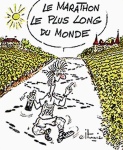
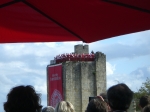
For the Bordelais, there is a pronounced distinction between “Left Bank” and “Right Bank,” each with their own Bordeaux sub-cultures and each laying claim to world-renowned chateaux. The Left Bank and its famous Medoc region boasts Mouton Rothschild, Margaux and Pichon Comtesse Lalande, while the Right Bank with its idyllic St. Emilion and Pomerol lays claim toPetrus and Cheval Blanc. Continue reading
Posted in AOC, APC, Bordeaux, Bordeaux Food And Wine, Buzzworthy, Cherie Du Vin, Foodie, French Wines, Local Food And Wine, Local Food And Wine Tastings & Tours, Local Food And Wine TV, localfoodwine, Oenotourism, Paige Donner, Paris Food And Wine, regional wines, Vancouver Food And Wine, Wine, Winemaker
Tagged bordeaux, Bordeaux Food And Wine, Cherie du Vin, Cheval Blanc, Jurade St. Emilion, Local Food And Wine, Local Food And Wine Tours and Tastings, Local Food And Wine TV, Marathon du Medoc, Medoc, Paige Donner, Petrus, Pichon Lalande, wine tourism
Mission Hill Family Estate Winery Commissions First
Canadian Sculptural Exhibition by French Artist Nathalie Decoster
West Kelowna, British Columbia (April 13, 2011) - Mission Hill Family Estate Proprietor Anthony von Mandl announces a collaboration with renowned French artist Nathalie Decoster.
Her first Canadian solo exhibition, to be held at the Okanagan winery June – October, follows recent installations in Paris, France at Avenue des Champs-Elysées, Luxembourg Gardens, and the Bagatelle Gardens. Internationally, Decoster installations are located in a range of settings from London and Vienna to Brazil and Venice.
Over Fifty Decoster installations will be featured on award-winning Okanagan winery grounds
Von Mandl first encountered these magnificent works of art more than eight years ago when he visited an exhibition at Chateau Smith Haut Lafitte winery in Bordeaux’s Graves appellation. Since that time, he has held a strong belief that an exhibition at Mission Hill would be a memorable event for winery guests, the Okanagan Valley and the Canadian arts community.
“What immediately struck me about Mrs. Decoster’s art were the curved hoops that cradle her human forms to create a strong visual connection between the art and the outside world,” says von Mandl. “These curved hoops are akin to the metal hoops that hold together the precious barrels that age our wines and are essential to crafting exceptional wines.”
Over the years, von Mandl and Decoster have been in regular contact planning the timing of her Canadian debut and the winery’s first exhibition of this magnitude. This year, Over 50 sculptures installed throughout the winery grounds will be enjoyed by guests who stroll the property, visit the wine cellars and taste the various vintages. The Decoster Sculpture Exhibition will be open to the public at no additional charge. The permanent installation of one significant sculpture ensures a lasting legacy for all who visit the winery.
“We hope Mrs. Decoster’s work resonates with visitors as she plays with the notion of sharing dreams to build connections between people,” says von Mandl. “We believe this same connection speaks to what we are trying to accomplish as winemakers. The parallels are undeniable and we invite art lovers, or the merely curious, to visit Mission Hill to discover the magnificent work of sculptress Nathalie Decoster.”
Von Mandl’s passion for the arts traces back to his European roots and earliest, fondest memories of his parents who fostered in him a love of arts, music, cuisine and learning. Mission Hill is a family-owned winery with a dedicated staff who shares its founder’s passion for wine, food and the arts. Their dedication to wine excellence is coupled with a long-term commitment to support the visual and performing arts, essential components of the Mission Hill guest experience.
About Nathalie Decoster
Decoster lives and works in her converted factory studio in Paris. Her early work with decorative art studios led her to perfect her sculpting technique with an old-school master and the development of personal creations with new skills and materials. The essential mediums of her work include steel, bronze, aluminum, stainless steel and concrete. She employs vocabulary recognizably her own. An “art brut” figure is her messenger represented in minimalist geometric structures which convey philosophical messages about the human condition. With a dash of humour, she makes us conscious of the absurdities in our modern human lives. Helping us identify with these themes presents a password to serenity. Visit nathaliedecoster.com for more information.
About Mission Hill Family Estate
Mission Hill Family Estate is world renowned for its award-winning wines, stunning setting, architecture, and Cuisine du Terroir-influenced Terrace Restaurant. The winery’s vineyards are located in five distinct growing regions of British Columbia’s Okanagan Valley. Reflective of the origin and unique character of the Valley and meticulous ‘Vine to Bottle’ program, Oculus, its signature Bordeaux-inspired wine, represents the pinnacle in premium winemaking. Proprietor Anthony von Mandl and winemaker John Simes produce elegant internationally acclaimed wines with New World flavours and Old World refinement from this incomparable wine valley. Visit missionhillwinery.com for more information and follow Mission Hill Family Estate on Twitter @missionhillwine.
Posted in AOC, Bordeaux, Buzzworthy, Event, Foodie, French Wines, Local Food And Wine, Local Food And Wine Tastings & Tours, localfoodwine, Oenotourism, Okanagan Wine, Paige Donner, Paris Food And Wine, regional wines, Vancouver Food And Wine, VOC, Wine, Winemaker
Tagged Anthony von Mandl, bordeaux, Local Food And Wine Tours & Tastings, Mission Hill Family Estate Winery, Nathalie Decoster, Oculus, okanagan food and wine, Okanagan Valley, Okanagan Winery, paris food and wine, Sculpture exhibit, Vancouver Food And Wine
By Sallie Robbins-Druian
GETTING STARTED
Let’s face it. Wine is complicated. And French wine is a swirling maelstrom of history, government control, regional divides, family in-fighting, and basic chemistry. But must we know every little detail to understand what we like when we drink it?
I want to demystify French wine. I want to simplify French wine. I want to drink French wine without reading volumes and memorizing details. I want to know about the people and families who make the wine, and how they feel about their commitment and drive for perfection. But honestly, I simply want to breath-in the aroma, take-in the first sip, savor the wine, linger on the mid-palette and head for the finish line with a smile of satisfaction.
It’s like searching for the Holy Grail. Except we are searching for magic in a bottle. And it can be elusive. But isn’t the thrill of the hunt in the searching? How do we begin such a journey? Must we climb to the top of a French mountain for enlightenment? Should we read a book or check wikipedia for each regional grape variety? Or might we jump right into the deep end and go for it! I say jump, but with some thought as to how to organize and accomplish this search.
Make it easy on yourself and create your own Tour de France. Pick a wine region such as the Loire Valley or Burgundy. Or select a varietal such as Sauvignon Blanc or Pinot Noir. Then choose one wine each from three different producers for comparison. Congratulations! You have just created a wine tasting. You have now entered The Wild and Wonderful World of Wine Subjectivity. Pat yourself on the back. You have already graduated without taking the exams.
It doesn’t matter what wine critic Robert Parker says or the local wine columnist professes. It only matters what YOU think when you inhale the aroma and linger over the first tastes. And remember, Mr. Parker was a beer drinker until he met a pretty French girl he wanted to impress. He got the girl and he built a career from practice, practice, practice.
TASTING PEP TALK Now it is your turn. First check the color and clarity, and then the aroma. When you take the first sip of any wine, take a mouthful and acclimate your mouth. On your second and third sips, pull the wine slowly over your tongue to get some aeration.
It’s like inhaling through your mouth with pursed lips. Feel how the wine settles on your tongue midway, giving you an impression of body and texture. Sense the depth of flavor and how it finishes. Did it drop off like a stone? Did it linger on your tongue then quietly disappear? Or did the flavor burst like a ripe peach spreading multiple layers of liquid goodness!
It’s your call. Because wine is subjective. And it is all about you. First, is it tasty? Do you like it? Then this wine is a winner. And so are you. Then move on to wine number two with wine notes in hand from wine number one. Look forward to comparing the two and challenging yourself. What are the differences, the pluses and minuses? Think of the strengths in flavor. Does it interest you? Are you now curious about wine number three?
Then let ‘er rip and move forward! With regard to “Wine Notes”, try to create your own vocabulary in describing the wines you taste. You’ve heard or read the pros pronounce the ultimate descriptives: asphalt, barnyard, grass, leather, tobacco, licorice et cetera. It’s a world of Jelly Belly flavors out there but it means nothing unless you discover the descriptive word yourself.
Besides attending trade tastings, we do private events and tasting classes on a regular basis, and sometimes it is even difficult for us to find the right descriptive word. The secret is to not try too hard. Keep an open mind and let the aroma and taste lead you. Sometimes it takes only one inhalation and sometimes it takes more little sniffs and multiple sips. Take your time and go slowly. Occasionally the aroma will be contrary to the taste, as I recently discovered with a Cotes du Luberon (Rhone Valley) I had in Paris this August. I will now add “nail polish” to my wine vocabulary. OK, lets be chic and use the French name “varnis”. I had no chance to think about it, because it hit me in the nose before I could open my mouth. The thought of tasting it was off-putting, but I lifted my glass and sipped like a sparrow.
Pure amazement and happiness danced in my mouth. The alcohol-prominent nose settled-down and the wine was enjoyed as we continued with our meal. Now let’s take it up a notch. Let’s talk about food. Let us think about food. Give yourself a food challenge and think about what foods will go with these wines you have just tasted. It’s a creative opportunity. It’s only a matter of taste. Your taste. You will not be judged by The Napoleonic Court of Food & Wine. The ball is in your court. Use your own good sense. Think of contrasts.
VARIATIONS ON A THEME: SAUVIGNON BLANC
Take Sauvignon Blanc as an example. Think about the minerality, what it does to your mouth, the clean crispness and the contrast potential. Opposites do attract. Perhaps a creamy seafood pasta with prawns or bay shrimp? With perhaps a small side of dressed baby greens with a splash of EVOO and a grind of sea salt. Or Patron peppers, sauteed in EVOO with a touch if sea salt. Keep it simple as you go. Don’t complicate your attempt in pairing a wine with food. Trust your instincts and use your imagination. Practice, practice, practice and begin your pairings conservatively, layering as you gain confidence.
However, the first order of business is to concentrate on tasting the wine and it’s flavors. For those of you who seek the perfect cocktail wines, ask yourself if this wine, this fresh and zippy Sauvignon Blanc that you have just sampled, stand-alone. From your third sip you will know for absolute sure and even perhaps from the first mouthful. But always give French wine a chance for adjustment when tasting. It’s more layered and complex by nature and design. And remember, your body chemistry can change your first impressions of any wine.
Did you brush your teeth just before tasting? Did you have a bad day at the gym? Did you have to fight the boss or traffic before arriving home? If so, then try to chill and take a break. Give yourself a small positive distraction, and relax for a few moments with a few deep breaths. Stress and wine are not amiable companions, and the aroma and taste can be affected or even soured, giving a false impression of the wine.
TASTING FOR REAL
So enough of this theoretical chit-chat and let’s get on to a real-time practice run with three of the same French varietals from three different producers. But let’s add a twist to make it more interesting. We will pick two very different Sauvignon Blancs from the region of the Loire Valley, but add a Sauvignon Blanc blend from Bordeaux as the third selection.
We are including the varietal, but adding an unusual use of the grape from another region. You can change-up the rules if you keep the varietals a common denominator. Anyway, it’s your tasting and you have thrown an interesting curve. Note: Always taste in the order of least complexity to the most, in order to not overwhelm your taste buds. If you aren’t familiar with the wines or French wines for that matter, always ask your wine merchant or search online for flavor profiles and recommendations.
NUMBER ONE is a 100% Sauvignon Blanc 2009 TOURAINE VAL DE LOIRE SAUVIGNON from the biodynamically farmed eastern Loire Valley vineyards of highly respected producer Francois Chidaine. We will get to the subject of biodynamics later. Let’s first pop the cork and pour. What is the first impression from the color and aroma? What are the qualities positive and negative?
Can you pick-up the earthiness and acidity in the nose? After you have taken your first mouthful and subsequent sips, can you sense the minerality and long refreshing finish? Is the body heavy with herbaceous or grassy undertones or is it clean and crisp, reminding you that this could be a perfect match for goat cheese or even oysters. What would pan-sauteed and salted almonds do to enhance these flavors?
Your mind races to find creative ways to pair this wine with food. Congratulations! You have opened the door to what good wine is all about! And one, that won’t break the bank at $17. Please note: I cannot improve on the information regarding Francois Chidaine and his biodynamic farming provided by the importer Michael Sullivan at www.beauneimports.com. Michael also lists on his website, retail sources where you can purchase these wines in the San Francisco Bay Area and beyond. All three Sauvignon Blancs in this discussion are his imports.
Moving on to NUMBER TWO, a 100% Sauvignon Blanc 2008 DOMAINE PELLE MENETOU-SALON BLANC MOROGUES from the small appellation of revered winemaker, Henri Pelle, located slightly south of Sancerre in the Loire Valley. He is known for the exceptional quality of his vineyards chalky clay soil. You can refer to the Beaune Imports website for further details on the “Kimmeridgian” soil and production notes. But let’s get on with what we are here for. Tasting! Continue with the same glass, simply swirl with a little of the new wine and toss. Never rinse your wine glass with water because it will dilute the next pour.
This Sauvignon Blanc is a special one. Pull the cork and pour. Then take in the aroma in a deep breath. Pull from your vocabulary of descriptive words and apply. Or think of a new one. Do you detect mineral and lemon? Is it juicy or dry? Or do you pick-up a scent of honey. Now it’s time for the unveiling.
Take a slow deep sip. Then take another sip or two. Think about the strong and long fruit-forward mid-palette taste and the level of acidity. Do they work in harmony? Does this wine not have the most amazing balance? Now can you understand why soil can make the difference between a good wine a great wine. This is refined, sophisticated and perfectly balanced. It zings!
And it has great finesse. It’s potential for food pairing is exciting to consider. Michael Sullivan notes that it is crisp, yet rich with exotic fruit flavors. Is that what you think? This could be a Caesar salad wine. This could be a creamy seafood pasta wine. Or a perfect choice for a creamy lemon-drizzled, avocado-shrimp cocktail with cilantro. And as I discovered, it is a hand-made sea salt potato chip kind of wine. The Menetou-Salon elevates the simple chip to a whole new level as it plays off the oil and sea salt.
This is a major “wow” factor that shows how good wine can take any humble food and transform it. But consider this also as a stand-alone wine that allows you to take in the sheer perfection from aroma to finish, and follow the layers of complexity. It is simply one of the finest Sancerres ever made, and is a bargain at $25.
We are close to the finish with NUMBER THREE, which is a blend of 70% Sauvignon Blanc with 20% Semillon and 10% Muscadelle grapes. This is a 2008 CHATEAU SAINTE-MARIE ENTRE-DEUX-MERS from the region of Bordeaux. This is a Grand Vin de Bordeaux (a great wine from Bordeaux with no specific meaning) made from “Vieilles Vignes” (old vines). ”Saint-Marie” refers to the vintner’s family residence that formerly was a nunnery. ”Entre-Deux-Mers” translates to “the land between two bodies of water”, which refers to the Garonne and the Dordogne rivers which border the hilly hand-picked vineyards of over-achievers and organic/biodynamic wine producers, Gilles and Stephane Dupuch. Learn more about them and their production techniques on the Beaune Imports website.
Note that Semillon (also the grape of Sauternes) is a rich honeyed blending grape that shines with Sauvignon Blanc. Muscadelle is a spicy grape variety that is blended in white Bordeaux in very small doses to balance and enhance the fruit. All this discussion has made me ready to get tasting. Get that cork out and pour.
Check the color and get your nose into a glass and take a slow, deep breath. Does the aroma strike you as something similar or different from the other two wines? You know by now that this is the most complex Sauvignon Blanc of our line-up. You know that the blending grapes have to make a difference in the basic flavor profile. Are you curious? Then take a big sip and let it saturate your mouth. Is it crisp with a complex and refined minerality? No?
Then please take another sip. Is there a clear fruit- forward flavor from the mid-palette to the finish? Note the depth of flavor. It’s like biting into a bursting ripe grape infused with honey. The blend of the Semillon and Muscadelle do not intimidate the Sauvignon Blanc.
They enhance it. This is another “stand-alone” wine. In fact, it is a great cocktail wine for the price of $20. And a wine that yet inspires interesting food pairings. I find that this works perfectly with a crispy chicken liver salad on a bed of greens, grilled or pan-fried sardines, or any savory food that has a bit of acidity. It is bold and perhaps deeper in flavors than the other two wines. This Sauvignon Blanc blend is layered with complexity, crisp acidity, flavors on many levels, and can take on any food pairing challenge.
FINAL THOUGHTS So now you have experienced three unique Sauvignon Blancs. Did it meet your expectations? Did it surprise you? Did it show you differences, similarities or even possibilities from the aromas to the mouthfuls? Did the value of the wine surpass the price? I am betting it did. If you are happy with the results, then now is the time to plan your next tasting into another region of France. For myself, I will look next to the reds of the Rhone Valley and find three interesting wines in common to compare.
I have purposefully avoided lengthy paragraphs about history, production, climate and soil. I believe you can get a great sense of history by TASTING the wines of France. You will continue to gain an appreciation for any good wine, by the goodness of the grapes and the inspired efforts of the winemakers. Still, we should be reminded that if it was not for the Phoenicians, the Greeks and the Romans, there would be no French wine, let alone the wines of California.
You have now earned the right to the use of the French word “terroir”. I paraphrase the classic definition offered by Bruno Prats, former owner of Chateau Cos d’Estournel in Bordeaux. Terroir is the combination of the climate, soil and landscape that forms the character of a vineyard and its wines. And when it is great, it is magic in a bottle. Remember lastly, it is no accident that wines go well with food.
Winemakers think first of their own tables and practice, practice, practice. The best advice I ever heard to accomplish the perfect match with food, is always try to think of the wine as a secondary “sauce” for the dish. Amen and pass the wine.
SALLIE ROBBINS-DRUIAN Sallie Robbins-Druian along with her husband Jay Druian, are the owners of The French Cellar in Los Gatos. They sell regional wines and objects from France.
Posted in BC Wines, Buzzworthy, Comox Valley, Event, Foodie, French Wines, Local Food And Wine, localfoodwine, Provence Wines, regional wines, Restaurant, Restaurant Etiquette, Spirits, Vancouver Food And Wine, Vancouver Island, VOC, Wine, Winemaker
Tagged Beaune, bordeaux, Bordeaux Food And Wine, Chateau Cos d'Estournel, Chateau Sainte-Marie Entre-Deux-Mers, Domaine pelle Menetou-Salon Blanc Morogues, Local Food And Wine, Local Food And Wine Tours & Tastings, Loire Valley, Muscadelle, Paige Donner, paris food and wine, Sallie Robbins-Druian, Semillon, The French Cellar, White Bordeaux
Rarely do you get such a glimpse of how basic an element wine is to French culture than at something like the Salon des Vins des Vignerons Indépendants. At an event like this one, you really get the feel of how wine is actually a basic food group for the French. It’s not a luxury or something that needs to be “mastered” but rather as elementary to daily life and basic needs as is water.
As a tourist or even as a resident foreigner, this Wine Salon is something I plan trips around and mark on the calendar months in advance. Held this past weekend at the ginormous Expo center that is Porte de Versailles in Paris, I had the chance to sip and taste new and just released vintages from over 250 independent wineries and winemakers from all the regions of France. The question was not a matter of access (entry cost 6 Euro) or accessibility (all the wineries were pouring). The question was whether I had the stamina to last a whole day. If I were a real pro, I would have gone over the course of each of the consecutive five days and prolonged the learning and the enjoyment, the listening and the tasting, stretching it out for every last drop.
The Salon des Vins des Vignerons Independants is something that everyone even remotely interested in wine must attend at some time. As a window onto wine and French culture, it’s unsurpassed. It’s also no-frills. And it’s held twice a year – in the Fall and in the Spring. The only people I envied as I roamed the alphabetized aisles, were those who were savvy enough to have come with their rolling suitcases which they packed full of bottles and cases of France’s most excellent and affordable wines.
Here’s a sampling:
Champagne Philippe Martin
They are located right in the heart of Champagne just between Reims and Epernay in Cumieres. They grow their chardonnay and pinot noir grapes on 10 hectares and produce 6 crus.
Cuvée de Réserve Brut – dry, frothy bubbly. At 14.40 Euro per bottle at the Salon it stands up to any of the internationally known brands.
Millésime 2002 – aged and made with pinot noir grapes as well as chardonnay, the richer, fruitier grape is detectable as soon as the elixir hits your tongue. At 22 Euro per bottle, you can see why I wish I’d had my rolling suitcase with me.
Alsace
Domaine Gerard Metz “The power of harmony”
The Salon tipplers tended toward the Alsatian wines, I noticed. Perhaps it had something to do with the fact that Paris had just seen its first snowfall of the season this weekend. It’s easy to think of a spicy Gewurztraminer and heavy spaetzle and sausages when it gets cold outside – all things that come from Alsace.
Gewurztraminer Vielles Vignes 2009 at 9 Euro per bottle this tending toward almost sweet gewurz tasted of the grape. In the sense that I almost felt like I had popped a whole grape into my mouth and was drinking of it, and a splash of alcohol.
Gewurztraminer “Cuvée Mégane” 2009 This guy was just shy of a late harvest wine. Its gold color spoke of its autumn, rich flavors even before it made itself known in the mouth. It sells for 13.50Euro per bottle.
Bourgogne – Chablis
It’s just too novel when you come to the realization that these wines you’ve long loved come from an actual place. In this case, Chablis.
Moreau Naudet at 5, rue des Fosses, Chablis offered Petit Chablis, Chablis 1er Cru and Chablis Grand Cru on offer. He ages his white wine for 24 mos. in barrel.
Chablis 1er Cru Vaillons 2007 was smooth and classy; its light golden color reminded me of summer in California. 26 Euro
Chablis 1er Cru Montmains 2008 had lively acid playing throughout the mouth. Well-balanced and a white you can keep for a few years and still enjoy. 26 Euro
Domaine Millet “Intensement Chablis”
The winery is in Tonnerre, still within Bourgogne. The Petit Chablis L’Angelusand Petit Chablis were noteworthy, all 2009. They also had their Chablis Vieilles Vignes and Chablis 1er Cru Vaucoupin for sale and to taste. The maturity of the old vines tend to be the wines I gravitate towards. www.chablis-millet.com
Côte du Rhône, St. Joseph
Domaine du Mortier, Saint Joseph by Didier Crouzet. What’s a wine tasting if you don’t indulge in a bit of the sacred St. Joseph? Part of the geography of Côte Rôtie, a St. Joseph can take good care of you through the Winter. On 10.5 acres Mssr. Crouzet cultivates his vines of character.
Domaine du Mortier, St. Joseph, 2008 A little light. Not often found in this wine or appellation, it can offer a more drinkable alternative to what is usually paired with a good steak or winter roast.
Domaine du Mortier, St. Joseph, 2009 is a considerably more powerful wine. 2009 vintages, like the 2010 harvest, will have legs for years to come. Dark fruit, some wood, wine with a backbone.
Bourgogne, Pouilly-Fuisse
In this cluster were three domains that are run by the same winemakers and which are all independent. The majority they’ve brought to market this year have won a medal or an award or even a “coup de coeur” from the Guide Hachette des Vins 2011.
Domaine de Fussiacus Pouilly-Vinzelles 2008. These grapes are from 30-40 year old vines. This lovely tinted yellow gold nectar won the Medaille d’Or Paris et Macon 2010. It was selling for a mere 10.30 Euro.
Domaine Chateau de Chaintre Bourgogne Blanc 2008 is the one which you’ll find in the Guide Hachettes des Vins 2011 listed as the Coup de Coeur. It is burgundy chardonnay and its well-balanced, proper notes and aromas make it a perfect choice for a dinner with family and friends.
Domaine de Fussiacus Vielles Vignes Pouilly-Fuisse 2008 had a nose of citrus and a delicious mouth of calcaire and mineral hints. Another one of those wines I wish I’d bought a case of. 15.10 Euro per bottle.
Corbières
From this region down near Perpignan which is still part of Languedoc-Roussillon you will find wines that have the garrigue in their molecules.
Abbaye de Fontfroide
A husband and wife winemaking team, Nicolas de Chevron Villette married his wife, Laure d’Andoque de Seriege, whose family has owned the Abbaye de Fontfroide and the vines that surround it for centuries. They have a tasting room, a restaurant and they offer vacation stays. It is also just 15 km. away from the region’s only 3 Michelin star restaurant run by France’s Best Chef 2010.
Abbaye de Fontfroide Cuvée Deo Gratias 2007 A finessed red wine that speaks of the region and the terroir. The nose is aromatic, the mouth hints of the garrigue.
Abbaye de Fontfroide Cuvée Oculus 2009 Though this is a white, it boasts a nutty mouth and an aromatic nose. At 7.10Euro a bottle, it is an elegant wine to serve at table with roasted poultry and new potatoes for example.
Abbaye de Fontfroide Cuvée Deo Gratias 2009 The grapes are Roussanne, Marsanne predominantly and the juice is new barrel aged. 12.90 per bottle.www.fontfroide.com
Posted in BC Wines, Buzzworthy, Event, Foodie, French Wines, Happy Hour, Local Food And Wine, localfoodwine, Okanagan Wine, Provence Wines, regional wines, Restaurant Etiquette, Spirits, Vancouver Food And Wine, Vancouver Island, Victoria, VOC, Wine, Winemaker, Yale Town
Tagged bordeaux, Bordelaise, bourgogne, burgundy, chablis, champagne, corbieres, cote du rhone, Local Food And Wine, localfoodandwine paris, Margaux, morgon, paris food and wine, salon des vins des vignerons independant